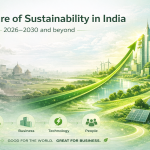
The Future of Sustainability in India: What 2026–2030 Really Looks Like
The future of sustainability in India is no longer a general idea; it’s already shaping how businesses operate, how cities grow, and how policies are being written.
For years, sustainability sounded like a long-term vision. Something to aim for “eventually.” But that timeline has shifted. What used to be future planning is now becoming present reality.
The challenge? Most people still think sustainability is only about the environment. That’s only one part of the story.
In this blog, we’ll break down the future of sustainability in India in a way that actually connects what’s changing, what it means for businesses, and how India is positioning itself for 2030 and beyond.
What is sustainability in simple terms?
Before we talk about the future of sustainability in India, let’s get the basics right.
Sustainability simply means meeting today’s needs without compromising the ability of future generations to meet theirs.
In business terms, it’s about:
- using resources responsibly
- reducing environmental impact
- creating long-term value instead of short-term gains
But here’s the important part: sustainability is not just environmental. It includes social impact and economic stability, too.
What makes this definition powerful is its long-term lens. It forces businesses and governments to think beyond immediate profits or outcomes and consider whether their actions are creating lasting value or future problems.
What are the three types of sustainability?
Sustainability is typically divided into three main types:
Environmental sustainability
This focuses on protecting natural resources, reducing pollution, and managing energy efficiently.
Social sustainability
This is about people, fair labour practices, community impact, and improving quality of life.
Economic sustainability
This ensures that growth is stable, responsible, and not damaging future potential.
These three types are the foundation of the future of sustainability in India. And in reality, they don’t operate in isolation. For example, improving environmental efficiency often reduces costs, which strengthens economic sustainability. At the same time, better social practices improve productivity and workforce stability.
What are the 4 pillars of sustainability?
In many frameworks, sustainability is expanded into four pillars:
- Environmental
- Social
- Economic
- Governance
The addition of governance is important because it ensures transparency, accountability, and ethical decision-making.
As India moves forward, governance is becoming a key driver in the future of sustainability in India, especially with increasing regulations and reporting standards.
Without governance, sustainability efforts often remain surface-level. With governance, they become structured, measurable, and scalable.
What are the 5 C’s of sustainable development?
The 5 C’s help simplify sustainability into actionable focus areas:
- Climate → addressing environmental challenges
- Community → improving lives and inclusivity
- Consumption → responsible use of resources
- Conservation → protecting ecosystems
- Corporate responsibility → ethical business practices
These principles are quietly shaping policies and corporate strategies across India.
What are the 17 Sustainable Development Goals in India?
India aligns with the United Nations’ 17 Sustainable Development Goals (SDGs), which cover areas like:
- no poverty
- zero hunger
- good health and well-being
- quality education
- clean water and sanitation
- affordable and clean energy
- climate action
These goals act as a roadmap for the future of sustainability in India, guiding both government policies and corporate actions.
How can India attain a sustainable future?
This is the big question.
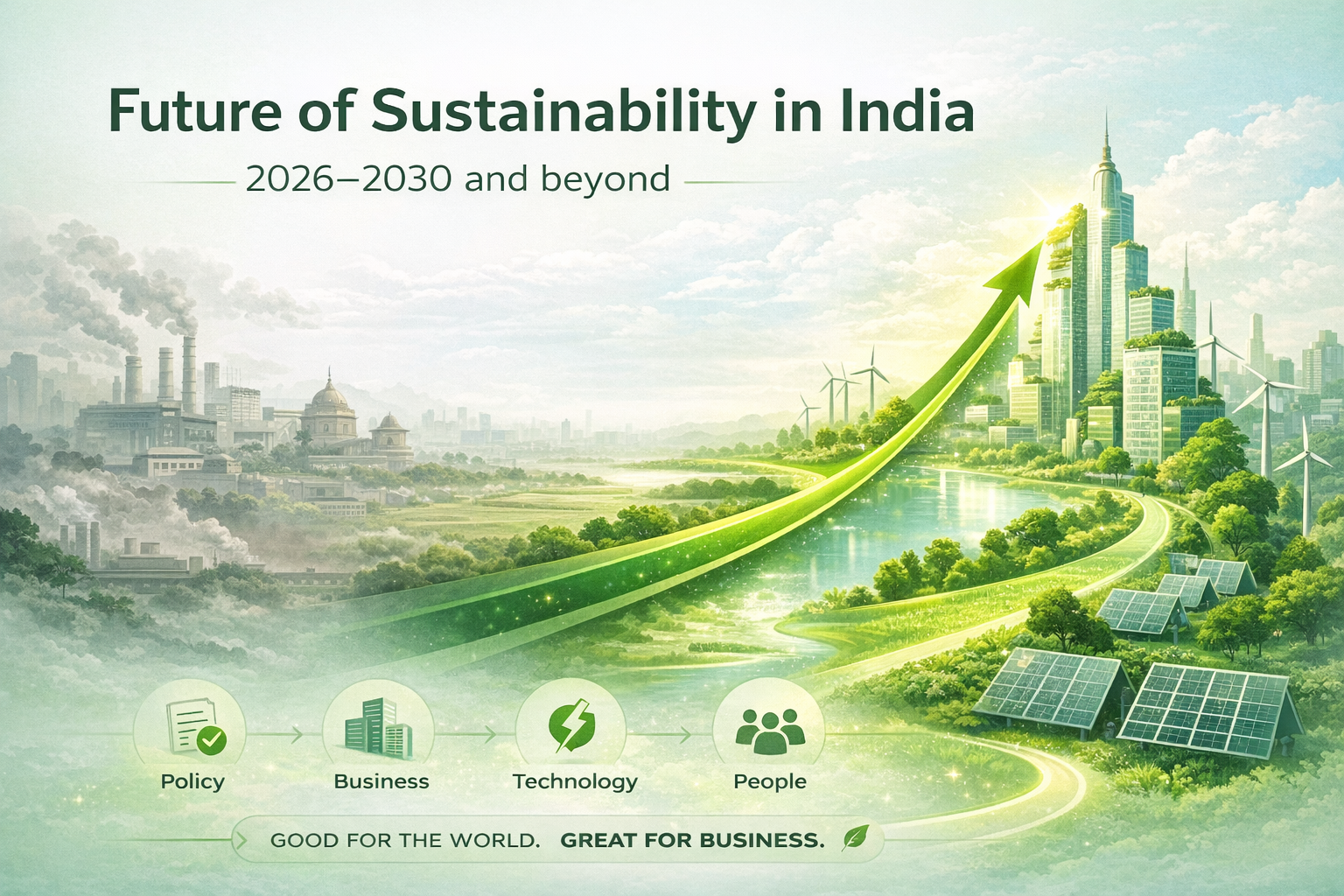
The future of sustainability in India depends on how effectively multiple systems work together.
Policy and regulation
Government initiatives like renewable energy targets, EV adoption, and ESG reporting frameworks are pushing sustainability forward.
Business adoption
Companies are increasingly integrating sustainability into operations, not just reporting.
Technology and innovation
Clean energy, smart infrastructure, and digital solutions are accelerating progress.
Public awareness
Consumers are becoming more conscious, influencing demand and business behaviour.
India’s strength lies in this combination of policy, business, and people moving in the same direction.
What is the sustainable future vision for 2030?
India’s vision for 2030 is ambitious.
It includes:
- increasing renewable energy capacity
- reducing carbon emissions intensity
- improving resource efficiency
- strengthening ESG compliance
But here’s the interesting part: the future of sustainability in India is not just about targets.
It’s about building systems that continue to improve even after 2030.
What makes the future of sustainability in India unique?
India’s sustainability journey is different from that of many developed countries.
Why?
Because India is:
- still growing rapidly
- managing large-scale population needs
- balancing development with environmental responsibility
This creates a unique challenge and also a unique opportunity.
India has the chance to build sustainably while growing, instead of fixing problems later.
The role of businesses in the future of sustainability in India
Businesses are not just participants; they are drivers.
The future of sustainability in India will depend heavily on how companies respond.
We’re already seeing shifts:
- ESG reporting is becoming more common
- supply chains demanding sustainability compliance
- investors prioritising responsible businesses
For companies, sustainability is no longer optional. It’s becoming a competitive factor.
Challenges India still needs to overcome
Let’s be real, the path is not smooth.
Some key challenges include:
- lack of awareness among smaller businesses
- initial cost of sustainability implementation
- data and reporting gaps
- balancing economic growth with environmental goals
But these challenges are also opportunities.
As solutions develop, they create space for innovation, consulting, and new business models.
Opportunities in the future of sustainability in India
This is where things get exciting.
The future of sustainability in India is creating opportunities across sectors:
- renewable energy
- green construction
- ESG consulting
- sustainable supply chains
- carbon management
Businesses that position themselves early in these areas will benefit the most.
The shift that changes everything
Here’s what most people don’t notice.
Earlier, sustainability was seen as a responsibility.
Now, it’s becoming an advantage.
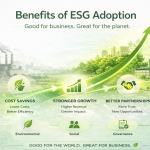
Companies that adopt sustainability early:
- gain trust faster
- access better opportunities
- build stronger systems
And over time, this advantage compounds.
Where is this all heading
The future of sustainability in India is not just about policies or global commitments; it’s about how businesses, systems, and people evolve together.
The shift is already happening.
Some are adapting early and building momentum. Others are still observing from the sidelines.
But one thing is clear: sustainability is no longer a future concept. It’s becoming the foundation of how growth will happen in India.
And the businesses that understand this today will be the ones leading tomorrow.