ESG for Pharma Companies: Why It’s Becoming a Business Necessity in 2026
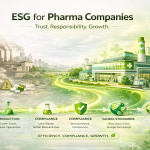
ESG for pharma companies is no longer just about compliance or reputation; it’s becoming a core factor in how pharmaceutical businesses operate, scale, and stay trusted in a highly scrutinised industry.
For years, pharma companies focused on innovation, research, and distribution. Sustainability and governance often came later. But that order is reversing now.
Because in pharma, the impact is not just environmental, it’s human. And that changes everything. Every decision, from sourcing raw materials to pricing drugs, directly affects lives.
Today, ESG for pharma companies is influencing how drugs are produced, how companies are evaluated, and even how patients and regulators perceive trust. What used to be internal decisions are now being examined externally.
In this blog, we’ll break down what ESG for pharma companies actually means, the challenges the industry faces, and how ESG is shaping the future of pharmaceutical businesses.
What is ESG in the pharmaceutical industry?
Let’s start with the basics.
ESG for pharma companies refers to how pharmaceutical businesses manage their environmental impact, social responsibility, and governance practices.
But in pharma, ESG goes deeper than most industries.
Environmental
- chemical waste management
- emissions from production
- water usage in manufacturing
- safe disposal of pharmaceutical products
Social
- patient safety
- drug accessibility and affordability
- ethical clinical trials
- employee health and safety
Governance
- regulatory compliance
- transparency in pricing
- ethical business practices
- data integrity
What makes ESG for pharma companies unique is the level of responsibility. It’s not just about operations, it’s about public health and trust.
And because of this, even small lapses in ESG can have large consequences, making it critical for pharma companies to treat ESG as part of core operations, not an external layer.
What are the 3 ESG criteria?
At its core, ESG is built on three criteria:
- Environmental
- Social
- Governance
For pharma companies, these criteria are tightly interconnected.
For example:
- environmental practices affect production quality
- social responsibility impacts patient trust
- governance ensures compliance with strict regulations
This interconnected nature is what makes ESG for pharma companies both complex and powerful.
It also means that improving one area often strengthens others. A company focusing on better governance often ends up improving transparency, which builds trust and strengthens social impact.
What are the 5 C’s of sustainability?
To simplify ESG further, many frameworks refer to the 5 C’s:
- Climate → reducing environmental impact
- Community → improving access to healthcare
- Consumption → responsible use of resources
- Conservation → minimising waste and protecting ecosystems
- Corporate responsibility → ethical decision-making
In pharma, these principles are not theoretical; they directly influence how companies develop, produce, and distribute medicines.
And increasingly, these principles are becoming expectations rather than differentiators. Companies are being evaluated on how well they integrate them into everyday operations.
What is the biggest problem with the pharmaceutical industry?
This is a question people often ask, and ESG is closely tied to the answer.
Some of the biggest challenges in the pharma industry include:
- lack of transparency in pricing
- ethical concerns in clinical trials
- environmental impact of drug manufacturing
- access and affordability issues
This is where ESG for pharma companies becomes critical.
Because ESG directly addresses these concerns:
- governance improves transparency
- social responsibility focuses on patient access
- environmental practices reduce ecological damage
So ESG is not just an add-on, it’s part of solving the industry’s biggest problems.
And the companies that address these challenges proactively are often the ones that build long-term credibility in the market.
Why ESG matters for pharma companies
Pharma is one of the most regulated industries in the world.
That means:
- high compliance requirements
- strict quality standards
- constant regulatory oversight
ESG for pharma companies helps navigate this complexity.
It ensures:
- better compliance
- stronger trust
- improved operational control
And here’s the key in pharma: trust is everything.
A single issue can impact not just revenue, but reputation at a global level. ESG helps reduce that risk by creating systems that ensure consistency and accountability.
ESG for pharma companies: key benefits
Let’s look at where ESG actually creates value.
Stronger trust and credibility
Patients, regulators, and partners all expect transparency.
Companies with strong ESG practices build credibility faster and maintain it longer. This becomes especially important in markets where trust directly influences adoption.
Better regulatory alignment
Pharma companies already deal with strict regulations.
ESG helps streamline compliance by creating structured systems for tracking and reporting. This reduces last-minute pressure and improves audit readiness.
Improved operational efficiency
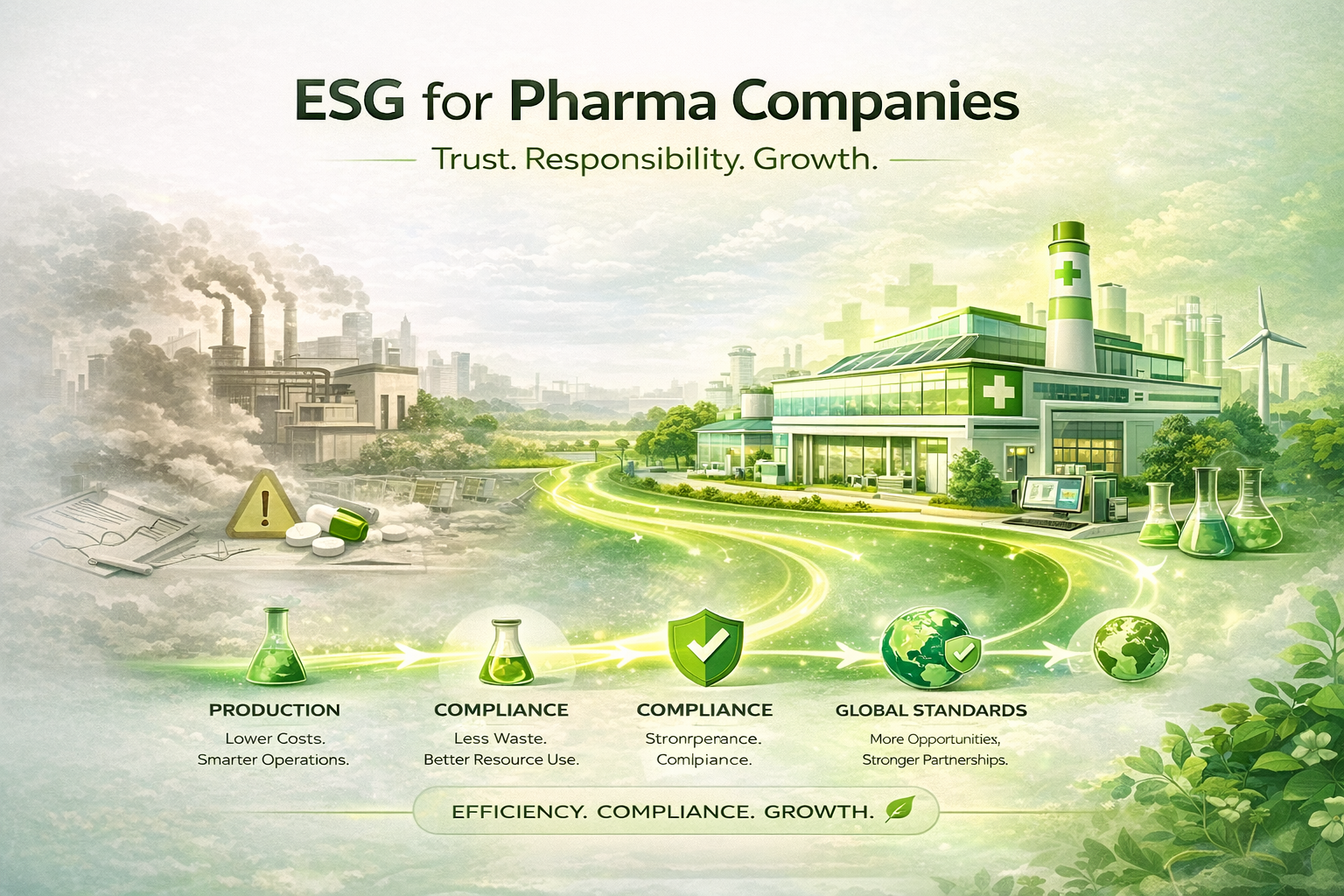
Reducing waste, optimising processes, and managing resources better leads to cost savings.
In large-scale pharma operations, even small improvements create a significant impact over time.
Access to global markets
International markets and partners increasingly require ESG compliance.
This means ESG for pharma companies directly affects expansion opportunities and global positioning.
Investor confidence
Investors are paying close attention to ESG in pharma.
Companies with strong ESG practices are seen as:
- less risky
- better governed
- more sustainable
This makes it easier to attract long-term investment.
What is an ESG checklist for pharma companies?
To implement ESG effectively, companies often follow a checklist.
Here’s a simplified ESG checklist for pharma companies:
Environmental
- monitor emissions and waste
- ensure safe disposal of chemicals
- optimize energy and water usage
Social
- ensure patient safety and drug quality
- maintain ethical clinical practices
- improve accessibility and affordability
Governance
- maintain regulatory compliance
- ensure transparency in operations
- implement strong internal controls
This checklist helps translate ESG from concept into action.
And the more structured this checklist becomes, the easier it is for companies to scale ESG practices across different units and geographies.
ESG challenges in the pharmaceutical industry
Let’s be honest, ESG is not easy to implement.
Some common challenges include:
Complex regulations
Pharma companies already operate under strict rules, making ESG integration more complex.
High implementation cost
Upgrading systems and processes can require significant investment.
Data and reporting issues
Tracking ESG metrics accurately can be challenging.
Balancing profitability and accessibility
Ensuring affordability while maintaining margins is a constant challenge.
But these challenges often arise when ESG is treated as an add-on rather than integrated into the core business model.
ESG opportunities in pharma
This is where things get interesting.
ESG for pharma companies is opening new opportunities:
- sustainable drug manufacturing
- improved supply chain transparency
- digital tracking and reporting systems
- patient-centric innovation
These are not just operational improvements; they are strategic advantages.
Companies that embrace ESG early are not just solving problems; they are positioning themselves ahead of competitors.
Is ESG still relevant in 2026?
Absolutely.
In 2026:
- regulations are becoming stricter
- patients are more aware
- investors are prioritising ESG
- global standards are evolving
So ESG for pharma companies is not a trend, it’s becoming a core part of how the industry operates.
The shift happening in pharma
Here’s what most people don’t notice.
Earlier, ESG was seen as compliance.
Now, it’s becoming a strategy.
Pharma companies that integrate ESG into their operations:
- build stronger systems
- gain trust faster
- adapt better to change
And over time, this creates a clear competitive advantage.
Where this leaves pharma companies
ESG for pharma companies is not just about sustainability; it’s about responsibility, trust, and long-term growth.
Some companies are already using ESG to strengthen their operations and reputation.
Others are still catching up.
But the direction is clear.
ESG is becoming part of how pharmaceutical companies operate, compete, and build trust, and ESG for pharma companies will continue to define which businesses are prepared for the future and which are not.