ESG for Manufacturing Companies: Why It’s Becoming a Competitive Advantage in 2026
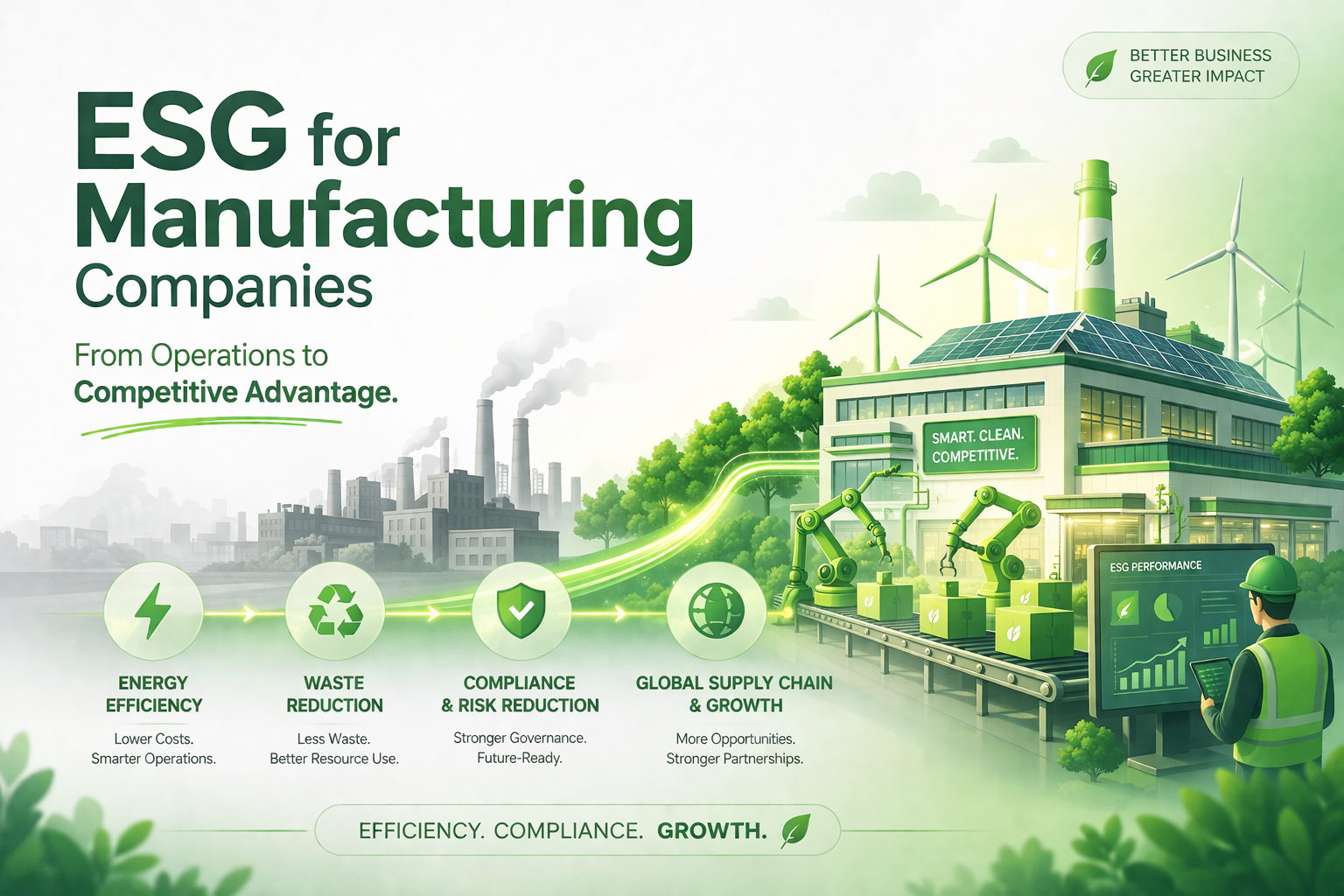
ESG for manufacturing companies is no longer just about compliance or ticking boxes; it’s quietly becoming one of the biggest factors deciding which companies grow faster and which ones struggle to keep up.
For a long time, manufacturing businesses focused on output, efficiency, and cost. Sustainability was often seen as an extra layer, something to think about later.
But here’s what most manufacturers don’t see at first: ESG is not slowing businesses down. In many cases, it’s actually making operations leaner, more efficient, and more predictable. The companies that understand this early are not just complying, they’re quietly outperforming competitors who are still treating ESG as an external requirement.
But that “later” has already arrived.
Today, ESG for manufacturing companies is influencing everything from operational costs to global partnerships and even investor decisions. And the shift is happening faster than most people expected.
In this guide, we’ll break down what ESG for manufacturing companies actually means, why it matters in 2026, and how it directly impacts growth, compliance, and long-term profitability.
What is ESG in the manufacturing industry?
Let’s start simple.
ESG for manufacturing companies refers to how manufacturers manage their environmental impact, social responsibility, and governance practices.
In a manufacturing setup, ESG becomes very real and operational.
Environmental
- energy consumption
- emissions and pollution
- waste management
- water usage
Social
- worker safety
- labor practices
- community impact
Governance
- compliance
- ethical sourcing
- transparency in operations
Unlike many industries, manufacturing has a direct physical impact on the environment and society. That’s why ESG for manufacturing companies is not optional; it’s deeply tied to how the business runs.
What makes ESG for manufacturing companies different is the scale of impact. Small inefficiencies in manufacturing, whether it’s energy, waste, or process gaps, get multiplied quickly. That’s why even minor ESG improvements can lead to noticeable operational and financial gains.
What are the 3 ESG criteria?
At its core, ESG is built on three criteria:
- Environmental
- Social
- Governance
These criteria act as a framework to evaluate how responsibly a company operates.
For manufacturing companies, these criteria are not abstract ideas; they translate into daily operations.
For example:
- environmental → managing emissions and waste
- social → ensuring worker safety on the factory floor
- governance → maintaining compliance and ethical processes
This is what makes ESG for manufacturing companies more practical than theoretical.
Why ESG matters more for manufacturing companies
Here’s the reality: manufacturing is one of the most resource-intensive industries.
That means:
- higher energy usage
- more regulatory scrutiny
- greater environmental impact
So ESG for manufacturing companies is not just about doing the right thing; it’s about staying operational and competitive.
Companies that ignore ESG often face:
- higher compliance risks
- increasing operational costs
- limited access to global markets
While companies that adopt ESG early gain:
- efficiency improvements
- stronger partnerships
- better market positioning
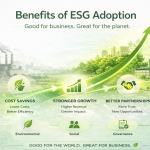
ESG for manufacturing companies: key benefits
Let’s talk about where ESG actually delivers value.
Cost efficiency
Optimising energy use, reducing waste, and improving resource management directly lower costs.
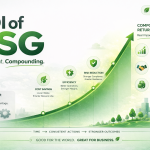
Over time, these savings compound, turning ESG into a financial advantage.
Risk reduction
Manufacturing businesses are heavily regulated.
ESG helps reduce:
- legal risks
- environmental penalties
- operational disruptions
Avoiding one major compliance issue can protect significant revenue.
Access to global markets
Many international companies now require ESG compliance from suppliers.
This means ESG for manufacturing companies directly impacts:
- export opportunities
- partnerships
- supply chain inclusion
Investor confidence
Investors are increasingly evaluating ESG performance.
Companies with strong ESG practices are seen as:
- more stable
- less risky
- future-ready
Stronger brand positioning
Even in manufacturing, brand perception matters.
Companies with visible ESG practices:
- build trust
- attract better clients
- differentiate themselves
What are the 7 pillars of corporate governance?
Governance is a key part of ESG for manufacturing companies.
The commonly referred 7 pillars include:
- accountability
- transparency
- fairness
- responsibility
- risk management
- compliance
- ethical conduct
In manufacturing, governance ensures that operations are not just efficient, but also structured and compliant.
Without strong governance, ESG efforts often fail to deliver real impact.
Is ESG mandatory in India?
This is a common question.
ESG for manufacturing companies in India is not fully mandatory across all businesses, but it is becoming increasingly regulated.
For example:
- BRSR reporting is required for the top-listed companies
- environmental regulations are tightening
- compliance requirements are increasing
So while ESG may not be universally mandatory yet, it is quickly becoming unavoidable.
Especially for manufacturing companies dealing with large-scale operations and supply chains.
What is the new ESG rule?
India is gradually strengthening ESG-related regulations.
Some key developments include:
- mandatory disclosures for listed companies
- stricter environmental compliance norms
- increased focus on sustainability reporting
These rules are pushing companies toward structured ESG practices.
For manufacturing companies, this means ESG is shifting from optional to expected.
ESG challenges in the manufacturing industry
Let’s be real, implementing ESG is not always easy.
Common challenges include:
High initial cost
Upgrading systems and processes can require investment.
Lack of awareness
Many companies are still unclear about how to implement ESG.
Data and reporting gaps
Tracking ESG metrics can be complex without proper systems.
Resistance to change
Operational changes are often difficult to implement.
But here’s the flip side: these challenges create opportunities for companies that move early.
ESG opportunities for manufacturing companies
This is where things get interesting.
ESG for manufacturing companies is opening up new possibilities:
- energy efficiency innovations
- sustainable production methods
- green supply chain integration
- carbon management solutions
Companies that adapt early are not just solving problems; they are creating new advantages.
Is ESG still relevant in 2026?
More than ever.
In 2026:
- regulations are increasing
- investors are prioritising ESG
- global clients expect compliance
- markets are rewarding responsible businesses
So ESG for manufacturing companies is no longer a trend; it’s becoming a business standard.
The shift most manufacturers are missing
Here’s the surprising part.
Many manufacturers still see ESG as a cost.
But in reality, ESG is becoming a performance driver.
Companies that implement ESG properly:
- improve efficiency
- reduce risks
- unlock new opportunities
And over time, this creates a strong competitive edge.
Where this leaves manufacturing companies
ESG for manufacturing companies is not just about sustainability; it’s about how the business evolves.
Some companies are already using ESG to improve operations and gain advantages.
Others are still waiting.
But the direction is clear.
ESG is becoming part of how manufacturing businesses operate, compete, and grow.
And the companies that understand this early will not just adapt, they’ll lead.