ESG Benefits for Companies: Why It Matters More Than Ever in 2026
ESG benefits for companies are no longer a “nice-to-have”; they’re quickly becoming a deciding factor in which businesses grow and which ones quietly fall behind.
Most companies still treat ESG like a checklist. Something to handle when required. Something for “later.” But here’s the catch: delay is already costing them opportunities, investor attention, and long-term stability.
In this guide, we’ll break down ESG benefits for companies in a way that actually makes sense, answer the most common questions people are searching for, and show why ESG is now directly tied to business growth in 2026.
What is ESG in simple words?
Let’s keep it straightforward.
ESG stands for Environmental, Social, and Governance.
It’s basically a way to measure how responsibly a company operates, not just in terms of profit, but in how it impacts the world around it.
- Environmental → How your business affects the planet
- Social → How you treat people (employees, customers, communities)
- Governance → How your company is managed and how decisions are made
So ESG, in simple words, is about running a business that is responsible, transparent, and future-ready.
What most people don’t realise is that ESG is also becoming a language that investors, clients, and regulators understand. When a company talks in ESG terms, it signals maturity and long-term thinking.
That’s why ESG benefits for companies are not just internal; they also shape how the outside world evaluates your business.
What are the 3 pillars of ESG?
Every ESG strategy is built on three core pillars:
Environmental
This includes things like carbon emissions, energy use, waste management, and pollution control.
Social
This focuses on employee well-being, workplace safety, diversity, and how you engage with customers and communities.
Governance
This covers ethics, leadership, compliance, transparency, and how decisions are made within the company.
These pillars are not separate; they are deeply connected.
For example, improving environmental practices often improves operational efficiency. Strong governance improves investor trust. Better social practices lead to higher employee retention.
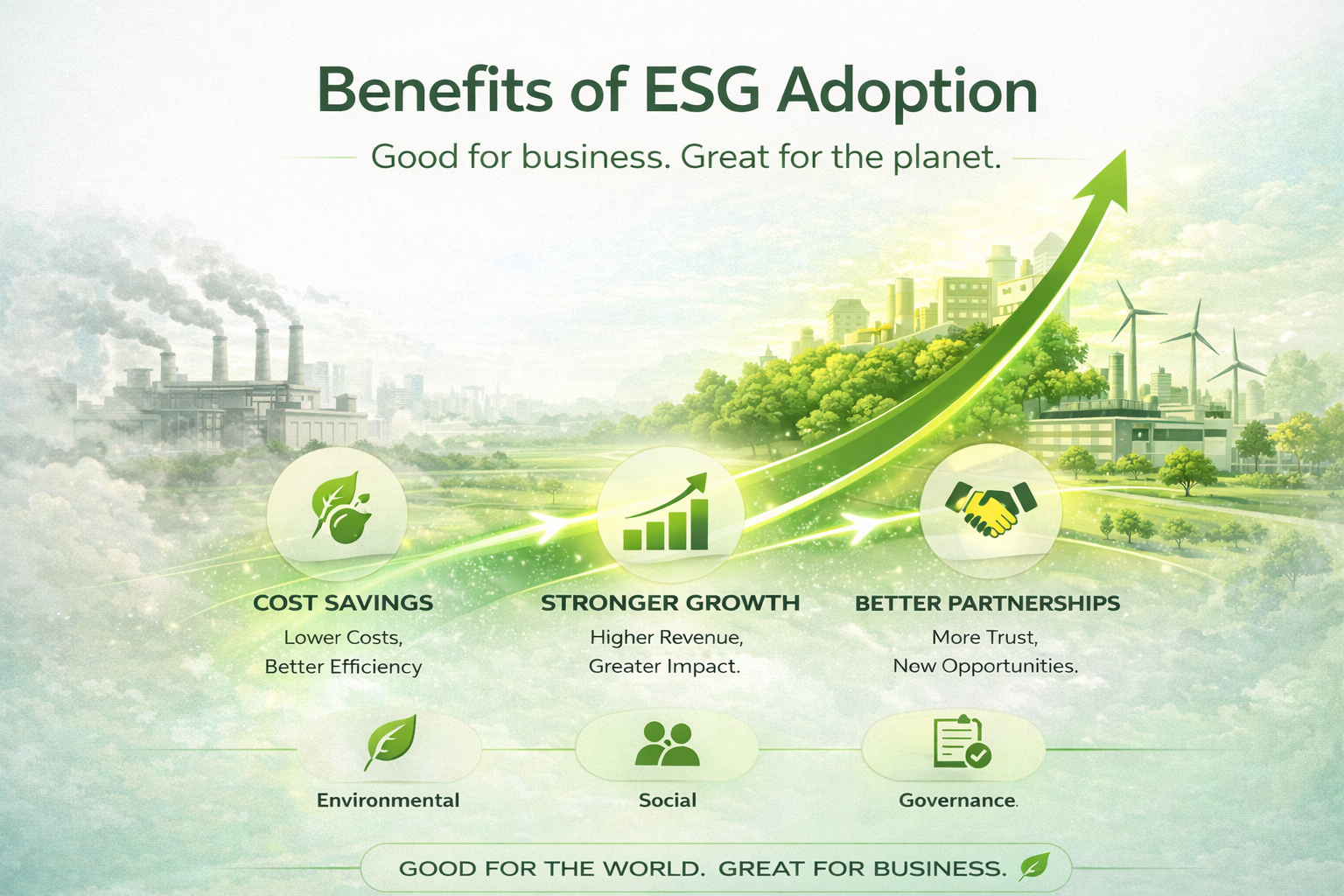
This interconnected nature is what makes ESG benefits for companies so powerful; one improvement often leads to multiple outcomes.
What are the ESG benefits for companies?
This is where things shift.
Most people think ESG is about compliance. In reality, ESG benefits for companies are about gaining an edge.
Stronger brand trust
People don’t just buy products anymore; they care about who they’re buying from.
Companies with clear ESG practices build trust faster, create deeper connections, and stand out in competitive markets.
Better access to funding and investors
Investors are actively looking for ESG-aligned businesses.
Why? These companies are seen as more stable, less risky, and more sustainable in the long run.
This opens doors to funding that many businesses don’t even realise they’re missing.
Cost savings over time
This one surprises a lot of business owners.
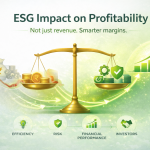
Improving energy efficiency, reducing waste, and managing resources better often leads to real cost savings.
There’s also a compounding effect here. Small improvements don’t just save money; they continue to reduce costs every month. Over time, this becomes a significant financial advantage.
Competitive advantage
Here’s the reality: Most businesses are still not serious about ESG.
That creates an opportunity.
Companies that adopt ESG early position themselves as leaders, win more partnerships, and stand out when clients or investors compare options.
And this advantage is time-sensitive. Right now, ESG adoption is uneven. But as more companies catch up, ESG will become a baseline expectation.
Reduced risk
Good ESG practices help businesses avoid penalties, compliance issues, and reputational damage.
Another important aspect is regulatory uncertainty. Laws and requirements are constantly evolving.
Companies with ESG systems already in place adapt faster because they already have structured processes and data tracking.
Attracting better talent
People want to work with companies that align with their values.
Strong ESG practices make your company more attractive to skilled professionals and help retain them longer.
Long-term sustainability
This is one of the biggest ESG benefits for companies.
ESG helps businesses adapt to changing regulations, market expectations, and global standards.
It keeps you relevant, not just today, but years ahead.
It’s not just about growth; it’s about staying in the game long enough to grow consistently.
What are the pros and cons of ESG?
Let’s be honest, ESG isn’t perfect.
Pros
- Builds trust and reputation
- Attracts investors
- Improves efficiency
- Reduces long-term risks
Cons
- Initial setup can require time and investment
- Can feel complex without proper guidance
- Needs consistent effort
Most of the “cons” come from unclear execution. With the right approach, ESG becomes structured and manageable.
What are the big 4 of ESG?
When companies start working on ESG seriously, they often follow established frameworks.
The commonly known “Big 4” are:
- GRI (Global Reporting Initiative)
- SASB (Sustainability Accounting Standards Board)
- TCFD (Task Force on Climate-related Financial Disclosures)
- CDP (Carbon Disclosure Project)
These frameworks are not just for large corporations. Even growing businesses can use them as a guide to build structured ESG practices.
What is an example of ESG?
Let’s make it real.
A company decides to:
- reduce its carbon emissions
- switch to renewable energy
- improve employee safety
- maintain transparent reporting
That’s ESG in action.
Even small steps like improving workplace policies or reducing resource usage count.
It’s not about doing everything at once, it’s about consistent improvement.
Is ESG still relevant in 2026?
Short answer: more than ever.
Regulations in India are tightening. Investors are paying closer attention. Global clients expect ESG compliance.
Banks, investors, and even partners are starting to include ESG factors in decision-making.
This means ESG benefits for companies are no longer indirect; they are directly influencing business opportunities.
Why ESG benefits for companies are only growing
There’s a clear shift happening.
Earlier, ESG was seen as reporting work. Now, it’s a growth strategy.
Companies that understand ESG early:
- move faster
- build stronger systems
- gain trust before competitors do
And once that advantage is built, it’s hard for others to catch up.
Where this leaves your business
ESG benefits for companies aren’t just theoretical; they show up in real decisions, real numbers, and real outcomes.
The gap right now is simple: some businesses are still figuring out ESG, while others are already using it to win better clients, attract smarter capital, and build stronger systems.
That gap won’t stay open for long.
If you start early, ESG becomes an advantage.
If you wait too long, it turns into pressure.
Either way, ESG is moving forward, and ESG benefits for companies will continue to shape how businesses grow, compete, and succeed in the years ahead.
ESG benefits for companies are no longer a “nice-to-have”; they’re quickly becoming a deciding factor in which businesses grow and which ones quietly fall behind.
Most companies still treat ESG like a checklist. Something to handle when required. Something for “later.” But here’s the catch: delay is already costing them opportunities, investor attention, and long-term stability.
In this guide, we’ll break down ESG benefits for companies in a way that actually makes sense, answer the most common questions people are searching for, and show why ESG is now directly tied to business growth in 2026.
What is ESG in simple words?
Let’s keep it straightforward.
ESG stands for Environmental, Social, and Governance.
It’s basically a way to measure how responsibly a company operates, not just in terms of profit, but in how it impacts the world around it.
- Environmental → How your business affects the planet
- Social → How you treat people (employees, customers, communities)
- Governance → How your company is managed and how decisions are made
So ESG, in simple words, is about running a business that is responsible, transparent, and future-ready.
What most people don’t realise is that ESG is also becoming a language that investors, clients, and regulators understand. When a company talks in ESG terms, it signals maturity and long-term thinking.
That’s why ESG benefits for companies are not just internal; they also shape how the outside world evaluates your business.
What are the 3 pillars of ESG?
Every ESG strategy is built on three core pillars:
Environmental
This includes things like carbon emissions, energy use, waste management, and pollution control.
Social
This focuses on employee well-being, workplace safety, diversity, and how you engage with customers and communities.
Governance
This covers ethics, leadership, compliance, transparency, and how decisions are made within the company.
These pillars are not separate; they are deeply connected.
For example, improving environmental practices often improves operational efficiency. Strong governance improves investor trust. Better social practices lead to higher employee retention.
This interconnected nature is what makes ESG benefits for companies so powerful; one improvement often leads to multiple outcomes.
What are the ESG benefits for companies?
This is where things shift.
Most people think ESG is about compliance. In reality, ESG benefits for companies are about gaining an edge.
Stronger brand trust
People don’t just buy products anymore; they care about who they’re buying from.
Companies with clear ESG practices build trust faster, create deeper connections, and stand out in competitive markets.
Better access to funding and investors
Investors are actively looking for ESG-aligned businesses.
Why? These companies are seen as more stable, less risky, and more sustainable in the long run.
This opens doors to funding that many businesses don’t even realise they’re missing.
Cost savings over time
This one surprises a lot of business owners.
Improving energy efficiency, reducing waste, and managing resources better often leads to real cost savings.
There’s also a compounding effect here. Small improvements don’t just save money; they continue to reduce costs every month. Over time, this becomes a significant financial advantage.
Competitive advantage
Here’s the reality: Most businesses are still not serious about ESG.
That creates an opportunity.
Companies that adopt ESG early position themselves as leaders, win more partnerships, and stand out when clients or investors compare options.
And this advantage is time-sensitive. Right now, ESG adoption is uneven. But as more companies catch up, ESG will become a baseline expectation.
Reduced risk
Good ESG practices help businesses avoid penalties, compliance issues, and reputational damage.
Another important aspect is regulatory uncertainty. Laws and requirements are constantly evolving.
Companies with ESG systems already in place adapt faster because they already have structured processes and data tracking.
Attracting better talent
People want to work with companies that align with their values.
Strong ESG practices make your company more attractive to skilled professionals and help retain them longer.
Long-term sustainability
This is one of the biggest ESG benefits for companies.
ESG helps businesses adapt to changing regulations, market expectations, and global standards.
It keeps you relevant, not just today, but years ahead.
It’s not just about growth; it’s about staying in the game long enough to grow consistently.
What are the pros and cons of ESG?
Let’s be honest, ESG isn’t perfect.
Pros
- Builds trust and reputation
- Attracts investors
- Improves efficiency
- Reduces long-term risks
Cons
- Initial setup can require time and investment
- Can feel complex without proper guidance
- Needs consistent effort
Most of the “cons” come from unclear execution. With the right approach, ESG becomes structured and manageable.
What are the big 4 of ESG?
When companies start working on ESG seriously, they often follow established frameworks.
The commonly known “Big 4” are:
- GRI (Global Reporting Initiative)
- SASB (Sustainability Accounting Standards Board)
- TCFD (Task Force on Climate-related Financial Disclosures)
- CDP (Carbon Disclosure Project)
These frameworks are not just for large corporations. Even growing businesses can use them as a guide to build structured ESG practices.
What is an example of ESG?
Let’s make it real.
A company decides to:
- reduce its carbon emissions
- switch to renewable energy
- improve employee safety
- maintain transparent reporting
That’s ESG in action.
Even small steps like improving workplace policies or reducing resource usage count.
It’s not about doing everything at once, it’s about consistent improvement.
Is ESG still relevant in 2026?
Short answer: more than ever.
Regulations in India are tightening. Investors are paying closer attention. Global clients expect ESG compliance.
Banks, investors, and even partners are starting to include ESG factors in decision-making.
This means ESG benefits for companies are no longer indirect; they are directly influencing business opportunities.
Why ESG benefits for companies are only growing
There’s a clear shift happening.
Earlier, ESG was seen as reporting work. Now, it’s a growth strategy.
Companies that understand ESG early:
- move faster
- build stronger systems
- gain trust before competitors do
And once that advantage is built, it’s hard for others to catch up.
Where this leaves your business
ESG benefits for companies aren’t just theoretical; they show up in real decisions, real numbers, and real outcomes.
The gap right now is simple: some businesses are still figuring out ESG, while others are already using it to win better clients, attract smarter capital, and build stronger systems.
That gap won’t stay open for long.
If you start early, ESG becomes an advantage.
If you wait too long, it turns into pressure.
Either way, ESG is moving forward, and ESG benefits for companies will continue to shape how businesses grow, compete, and succeed in the years ahead.